
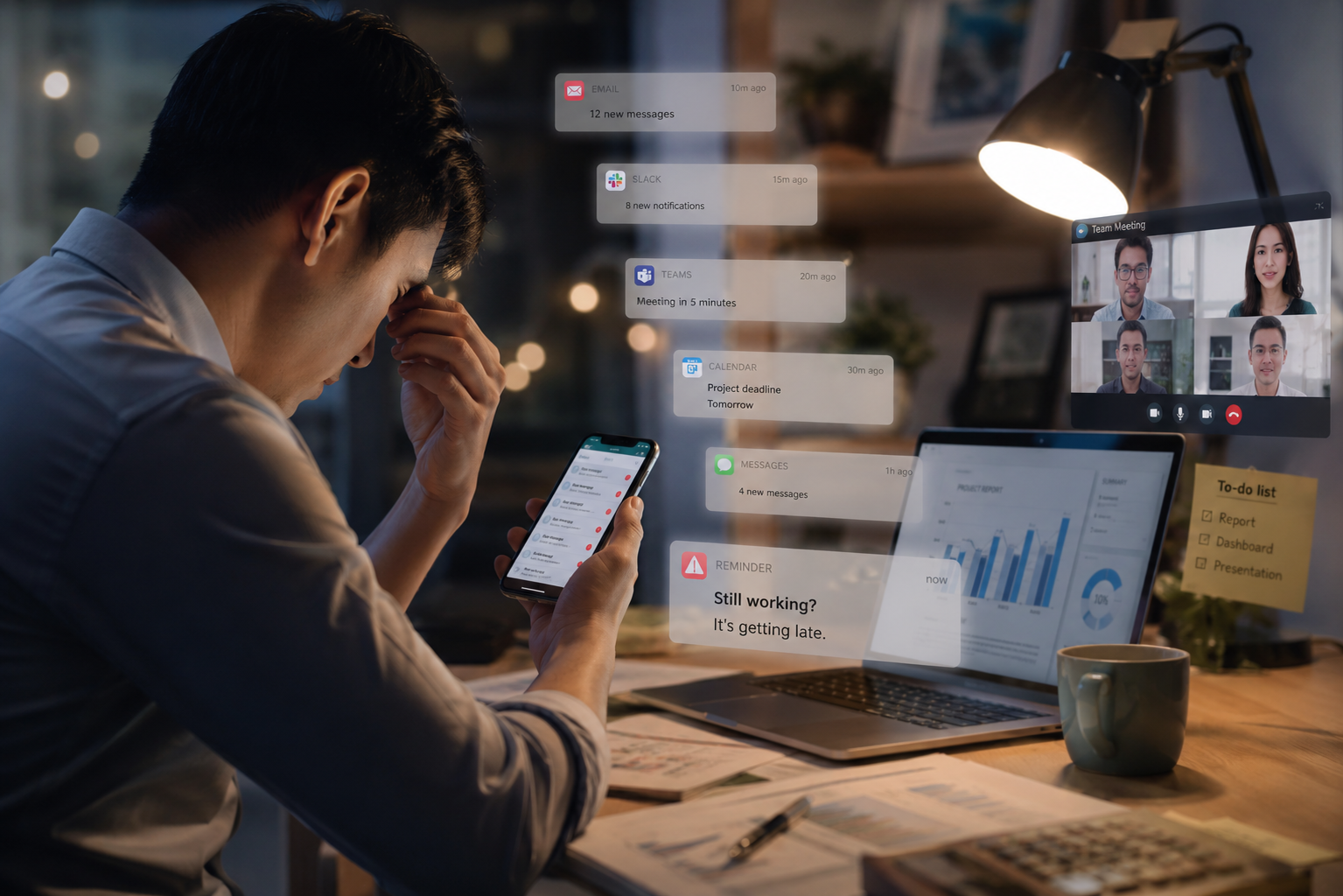
A few years ago, most people believed technology would make work easier, faster, and more flexible. In many ways, it did. Remote work, instant communication, cloud collaboration, and virtual teams transformed how businesses operate across the world.
But as digital workspaces continue to grow, another conversation is becoming more important: how constant connectivity affects people behind the screens.
Today, many employees no longer “leave work.” Notifications follow them to dinner tables, bedrooms, vacations, and weekends. The line between personal life and professional responsibilities has become increasingly blurred. Researchers studying digital connectivity and remote work have found rising concerns around burnout, cognitive overload, stress, and sleep disruption caused by always-on work environments.
Remote work itself is no longer viewed as temporary. Companies across industries continue adopting hybrid and remote-first systems because they reduce operational costs and expand access to global talent. Even major organizations now consider flexible work a permanent part of modern business strategy.
However, flexibility also comes with challenges.
Without clear boundaries, workers often end up extending their work hours without realizing it. Discussions in remote work communities frequently mention “Slack anxiety,” constant meeting fatigue, and pressure to appear available at all times.
Digital wellness is becoming one of the biggest workplace priorities of the next decade.
Companies are starting to redesign workflows around employee well-being rather than nonstop availability. Some organizations now implement meeting-free hours, asynchronous communication, offline periods, and mental wellness initiatives to reduce digital exhaustion. Studies on workplace wellness programs suggest that healthier digital habits can improve both productivity and employee retention.
Technology itself may also help solve the problem it created.
AI scheduling assistants, smarter collaboration systems, personalized wellness platforms, and virtual healthcare tools are being developed to support healthier work habits. Experts believe future digital workplaces will focus less on constant activity and more on sustainable performance.
Still, one challenge remains difficult to solve: human attention.
The future workplace may not be defined by bigger offices or faster internet speeds. Instead, success could depend on how well businesses protect focus, balance, and mental energy in an increasingly connected world.
As work continues moving online, companies that prioritize digital wellness may ultimately build stronger, healthier, and more productive teams for the long term.