
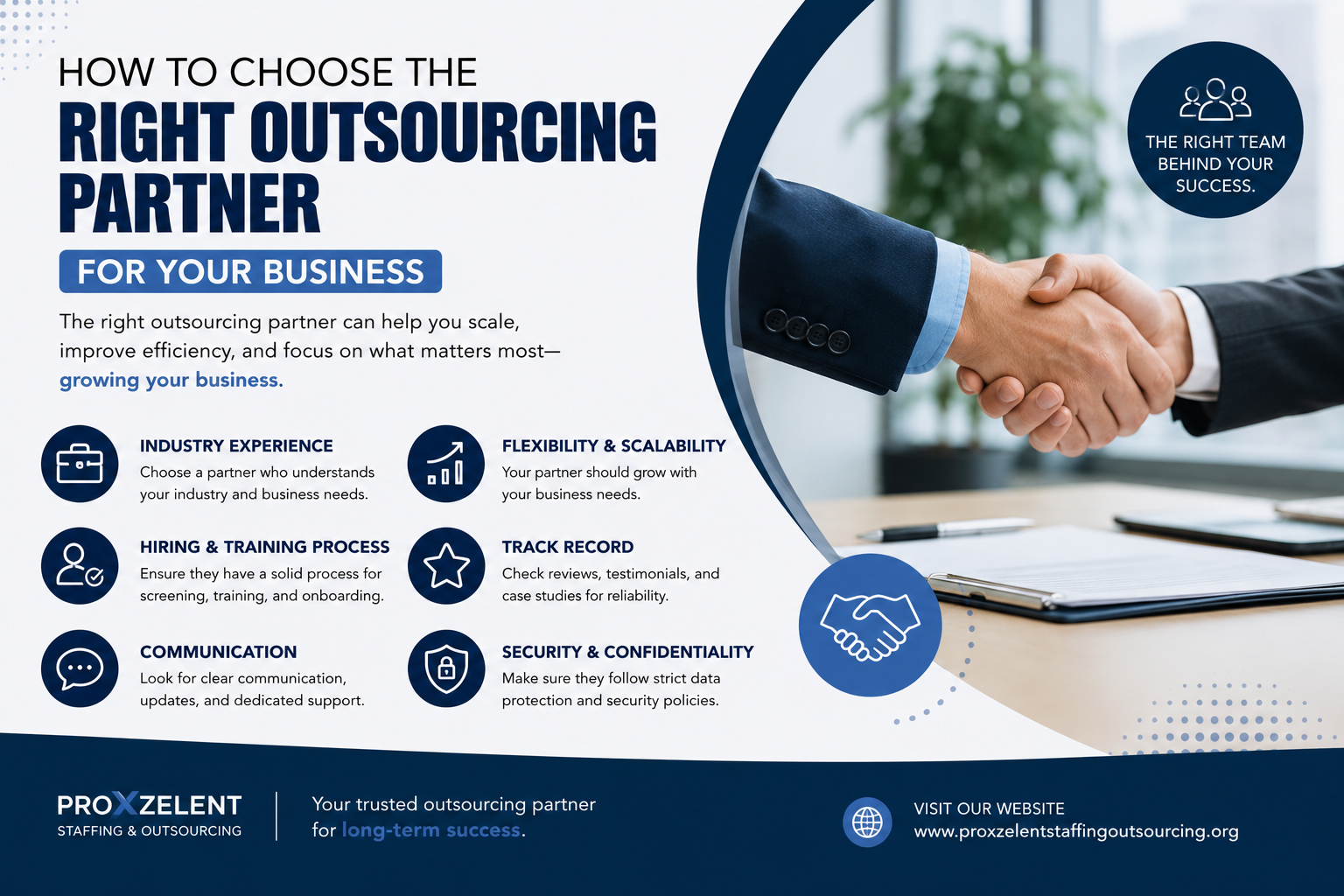
Once you’ve identified that your business needs outsourcing support, the next important step is choosing the right partner. The success of outsourcing doesn’t just depend on delegation—it depends on who you trust to handle your business operations.
A strong outsourcing partner can help you scale efficiently, improve productivity, and maintain quality. On the other hand, the wrong choice can lead to communication issues, delays, and wasted resources.
Here’s a guide to help you make the right decision.
1. Look for Industry Experience
Not all outsourcing providers are the same. Some specialize in customer service, while others focus on administrative support, marketing, or technical roles.
Choose a partner who understands your industry or has proven experience working with similar businesses. This ensures they already know the workflow, expectations, and common challenges.
2. Evaluate Their Hiring and Training Process
A reliable outsourcing company should have a structured process for:
- Screening candidates
- Skills assessment
- Background checks
- Training and onboarding
This ensures that the staff assigned to your business are not only qualified but also prepared to perform effectively from day one.
3. Communication Is a Key Factor
Clear communication can make or break an outsourcing relationship. Before committing, check if they offer:
- Dedicated account managers
- Regular progress updates
- Easy communication channels (email, chat, video calls)
- Time zone compatibility
Strong communication ensures smooth collaboration and fewer misunderstandings.
4. Check Flexibility and Scalability
Your business needs may change over time. A good outsourcing partner should be flexible enough to:
- Scale up or down based on demand
- Provide additional roles when needed
- Adjust to your workflow and systems
This flexibility is essential for growing businesses that experience fluctuating workloads.
5. Review Their Track Record
Always look for proof of reliability. This can include:
- Client testimonials
- Case studies
- Reviews or feedback
- Years of experience in the industry
A strong track record shows that the company has successfully supported other businesses and can deliver consistent results.
6. Prioritize Security and Confidentiality
Since outsourcing often involves sensitive business data, security should be a top priority. Make sure the provider has:
- Data protection policies
- Confidentiality agreements
- Secure systems and tools
This helps protect your business information and builds trust.
Final Thoughts
Choosing the right outsourcing partner is just as important as deciding to outsource in the first place. The right team will not only support your operations but also help your business grow faster and more efficiently.
Take time to evaluate your options carefully, ask the right questions, and choose a partner that aligns with your goals.