
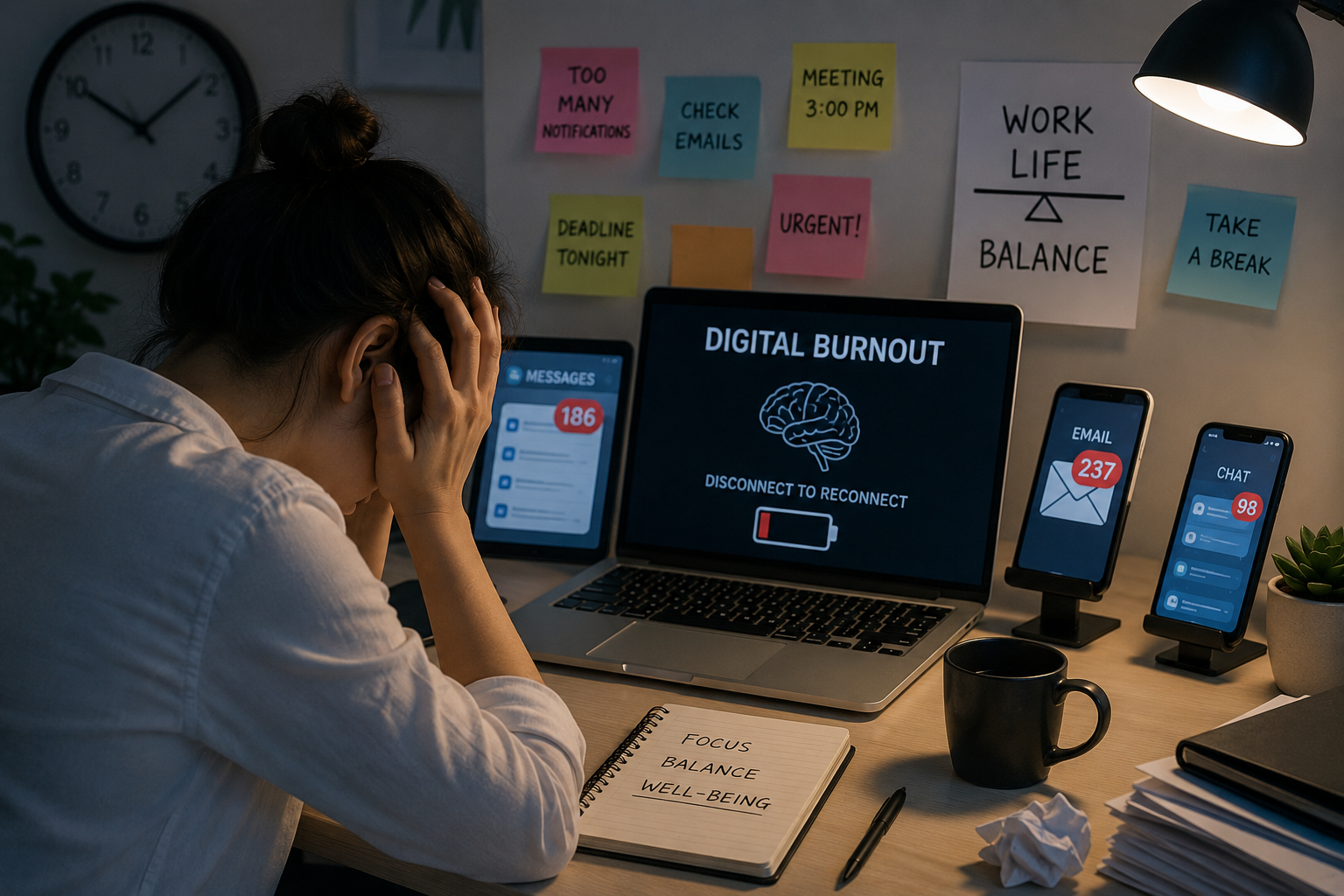
For years, businesses focused heavily on productivity, faster communication, and constant online availability. But as companies continue adapting to remote work, outsourcing, and digital operations, another issue has quietly started growing in the background — digital burnout.
Today’s workforce spends most of the day switching between emails, video calls, chat platforms, project management tools, and social media updates. While technology has made collaboration easier, it has also blurred the line between work and personal time. Many employees now feel pressure to always be available, respond instantly, and stay connected even after working hours.
Experts have started noticing how digital overload affects both performance and employee well-being. Studies and business reports discussing remote staffing and modern work environments show that flexibility improves growth, but poor work-life balance can reduce long-term productivity and employee retention.
One major challenge is notification fatigue. Workers receive dozens or even hundreds of notifications daily from different platforms. Over time, constant interruptions reduce focus, increase stress levels, and affect overall mental wellness. Instead of improving efficiency, excessive digital communication can sometimes create mental exhaustion and slower decision-making.
Another overlooked factor is the emotional effect of always working online. Without clear boundaries, employees may struggle to disconnect from work. Some remote workers report feeling isolated despite being constantly connected through digital platforms.
Businesses are now beginning to rethink how they manage productivity. Instead of measuring success by “online presence,” many companies are focusing more on output, flexible schedules, and employee wellness. Some organizations encourage fewer meetings, designated offline hours, and mental health support programs to create healthier digital work environments.
Technology itself is not the problem. In fact, digital tools remain essential for business growth, remote staffing, and global collaboration. The real challenge is learning how to use these tools without creating constant pressure and burnout.
As modern workplaces continue evolving, companies that prioritize both efficiency and employee well-being may ultimately build stronger, more sustainable teams. In the future, successful businesses will likely be the ones that balance innovation, flexibility, and healthier ways of working.